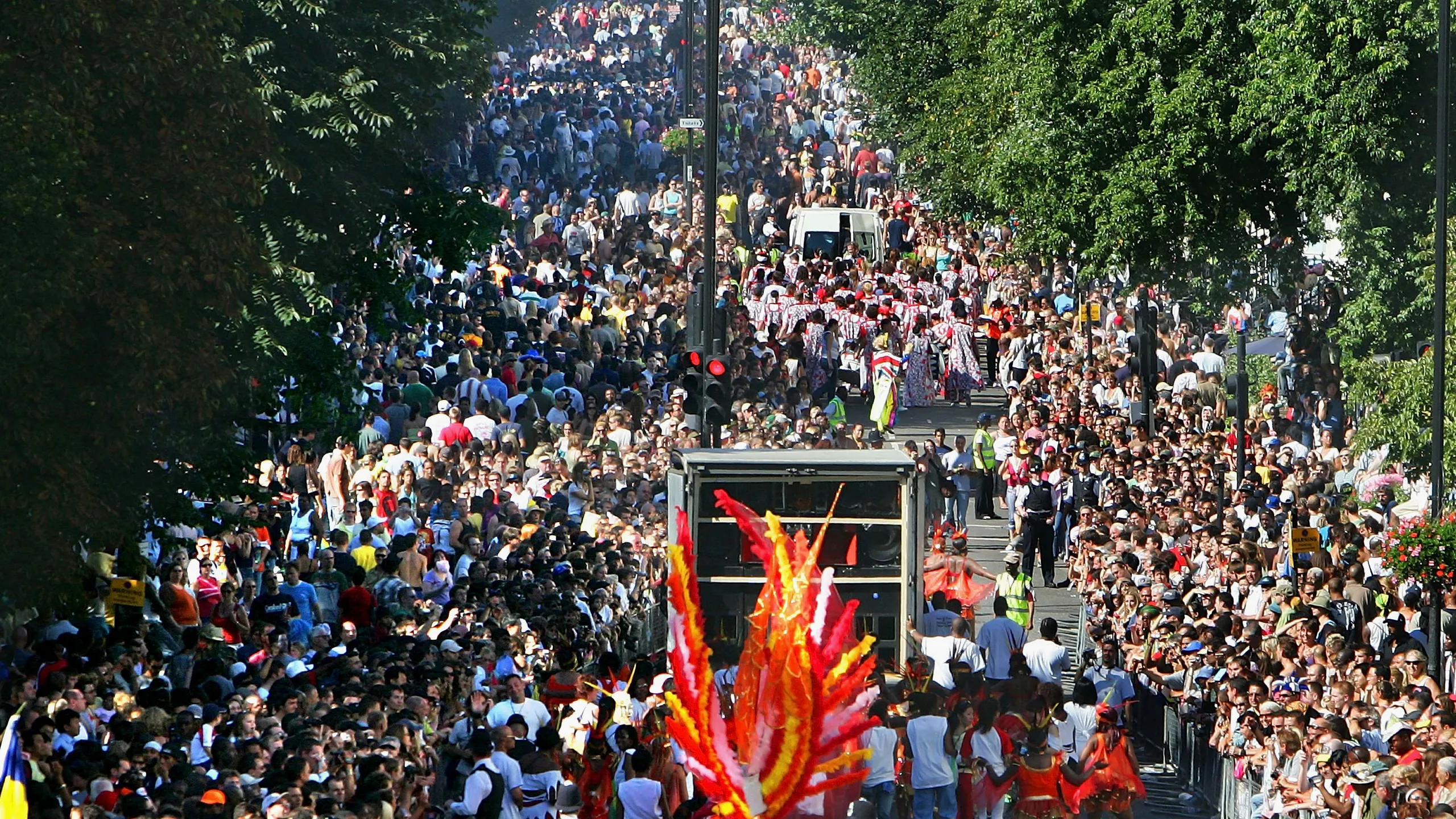
Notting Hill Carnival is Europe's biggest street party and a cultural institution. Caribbean carnival is the source — the original, the template, the thing that Notting Hill was created to celebrate.
They are related but distinct experiences. Here is an honest comparison.
The Origins
Caribbean carnival — particularly Trinidad Carnival — has roots going back to the 18th century. Enslaved Africans in Trinidad were excluded from the French colonial masquerade balls, so they created their own celebrations outside. After emancipation, they reclaimed the streets. The traditions of J'ouvert, road march, masquerade costumes and soca music all emerged from this history.
Notting Hill Carnival was founded in 1966 by Claudia Jones and the Trinidadian community in London as a direct expression of Caribbean carnival culture in Britain. It was an act of cultural resistance and celebration in a city that had seen significant racial tension.
Understanding this history makes both events richer.
Scale
Notting Hill: 2+ million people over two days. One of the largest street festivals in the world.
Caribbean carnivals: Vary enormously. Trinidad draws around 40,000 masqueraders on the road (many more spectators). Barbados Crop Over is smaller and more intimate. Grenada Spicemas is smaller still.
At Notting Hill, the sheer scale means you will spend significant time navigating crowds. At Caribbean carnival, even the bigger events feel more connected because the community is smaller.
The Weather
Notting Hill: August Bank Holiday weekend in London. Rain is common. Sun is possible. Layers are advisable.
Caribbean carnival: Varies by island. Trinidad in February is hot and humid, typically 30°C+. Barbados in August is reliably warm with the odd shower. Grenada in August is similar.
If you want guaranteed sunshine, the Caribbean wins.
The Music
Both are soca-dominated in terms of the road march music. But there are differences.
Notting Hill: Sound systems line Ladbroke Grove and Portobello Road. The music is more varied — soca, reggae, dancehall, calypso, steelpan on the streets. The day stage at Powis Square hosts live acts.
Caribbean carnival: The music is tighter and more intentional. The road march in Trinidad, for example, has an official Road March competition — the song that is played most times as each band passes a judging point wins. Every truck competes. The music is more focused.
The Costume Experience
Notting Hill: You can watch the parade costumes from the side of the road. To wear a costume and play mas, you register with a mas band and parade on the Sunday (Children's Day) or Monday. The costume quality varies by band.
Caribbean carnival: Playing mas is the central experience. You are in the parade, not watching it. The costumes are more elaborate, the sections more varied, and the experience of being on the road in costume is fundamentally different from spectating.
The Cost
Notting Hill: Extremely affordable. You can attend for free. Mas band registration is around £50–£150. London accommodation is a cost but you are likely already in the UK.
Caribbean carnival: Significantly more expensive once you factor in flights, accommodation, costume (£300–£700) and fetes (£200–£500). Trinidad or Barbados from the UK costs £1,500–£3,000+ all in.
Which Should You Do?
Do Notting Hill if: You want an introduction to the culture, you are working with a limited budget, you have never experienced Caribbean music and community in this way, or you want to ease into it before committing to a Caribbean trip.
Do Caribbean carnival if: You want the full authentic experience, you want to play mas properly, you want the heat and the island setting, or you have already done Notting Hill and want to go deeper.
Do both. They are not alternatives. Notting Hill in August, Trinidad the following February. Many people in the carnival community do exactly this.
Use the TriniTravels carnival quiz to find out which destination suits your budget, timing and vibe best.